NFL’s Largest Stadiums by Listed Capacity in 2026
By Dale Merrin ·
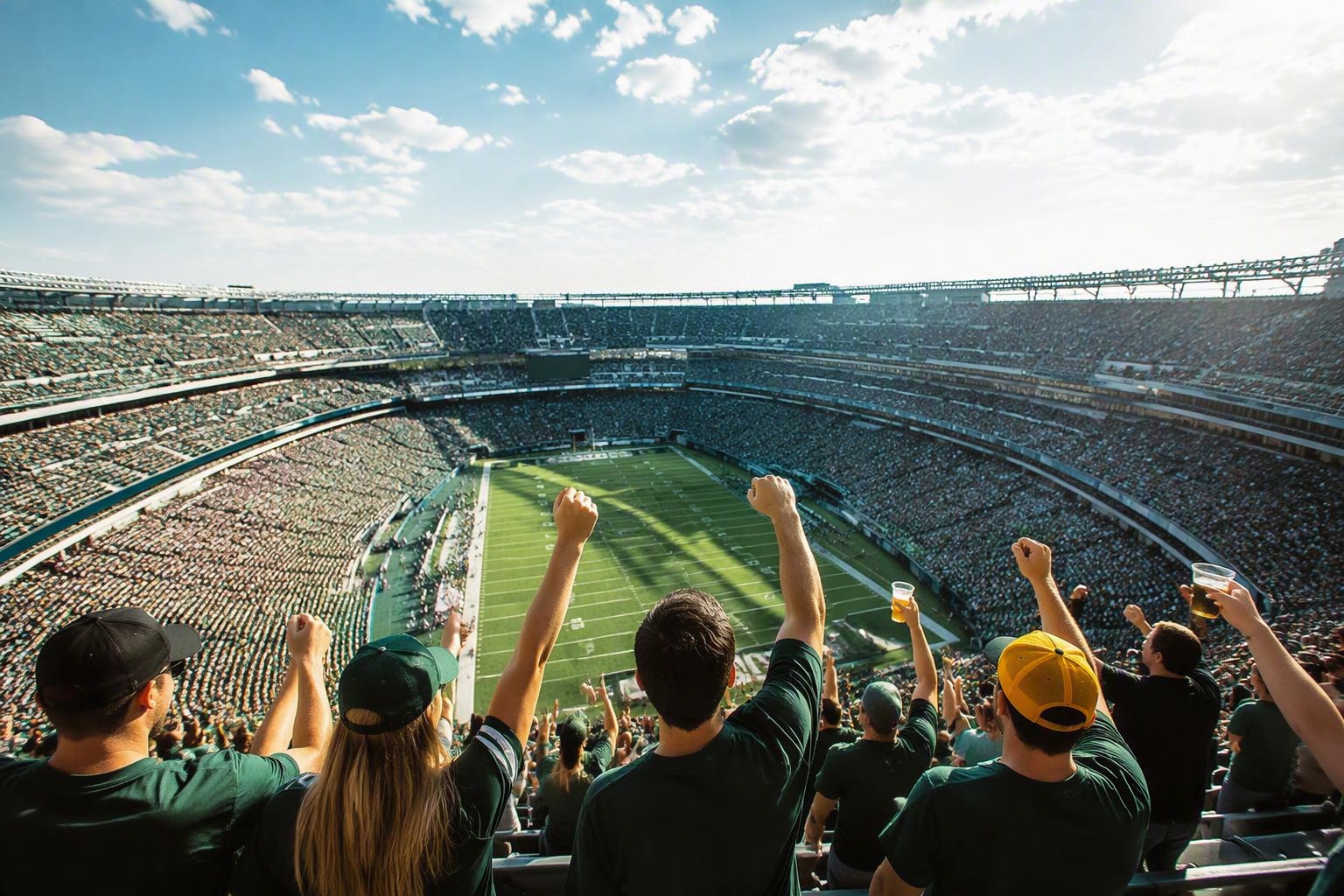
Overview
MetLife Stadium is the largest current NFL stadium by supported normal listed capacity, with 82,500 seats. Lambeau Field ranks second at 81,441, followed by AT&T Stadium at 80,000, according to the current-stadium listing and a matching Fox Sports comparison.
That answer applies to listed seating in a stadium’s normal configuration. It does not settle which venue can hold the most people after expansion for a major event. SoFi Stadium, for example, is listed at 70,240 but can expand beyond 100,000, according to the SoFi Stadium profile. AT&T Stadium also has a reported peak capacity above 100,000. Because the supplied sources do not use a common definition for those maximum configurations, they do not establish whether SoFi or AT&T is larger when expanded.
The three largest NFL stadiums by listed capacity
For a defensible 2026 comparison, use normal listed seating rather than maximum event capacity. The evidence consistently supports the same three leaders, but it does not provide a complete, consistently dated ranking of all 30 full-time NFL venues under one verified definition. The table therefore stops at the three positions that the supplied sources corroborate.
| Rank | Stadium | Normal listed capacity | NFL team or teams | Location | Opened | Roof | Playing surface |
|---|---|---|---|---|---|---|---|
| 1 | MetLife Stadium | 82,500 | New York Giants; New York Jets | East Rutherford, New Jersey | 2010 | Open-air | FieldTurf |
| 2 | Lambeau Field | 81,441 | Green Bay Packers | Green Bay, Wisconsin | 1957 | Open-air | Hybrid grass |
| 3 | AT&T Stadium | 80,000 | Dallas Cowboys | Arlington, Texas | 2009 | Retractable | Artificial |
The capacities, locations, opening years, roofs, and surfaces come from the current NFL stadium list. The leading order is independently repeated by Fox Sports and Yahoo Sports: MetLife first, Lambeau second, and AT&T third.
MetLife’s lead is narrow but clear under this measurement. Its listed capacity is 1,059 seats greater than Lambeau Field’s: 82,500 − 81,441 = 1,059. Lambeau is 1,441 seats ahead of AT&T Stadium: 81,441 − 80,000 = 1,441. Those calculations compare the published figures directly and do not introduce expandable or special-event configurations.
Lambeau Field is also the largest supported single-team NFL stadium in this leading group. MetLife has the higher overall listed capacity, but the Giants and Jets share it. Lambeau’s only listed NFL tenant is the Green Bay Packers, while AT&T Stadium is home to the Dallas Cowboys, according to the current-stadium listing.
What is the smallest current NFL stadium?
The supplied evidence does not identify the smallest 2026 NFL stadium with enough consistency to declare a winner. Older ranking sources name Soldier Field, while two 2026 listings give conflicting capacities for the Buffalo Bills’ new Highmark Stadium.
BetMGM’s stadium ranking lists Soldier Field at 61,500 and identifies it as the league’s smallest venue. Fox Sports also names Soldier Field as the smallest, although the supplied excerpt does not add another capacity figure.
The 2026 evidence complicates that answer. The current NFL stadium list reports Highmark Stadium at 60,108 seats and identifies it as a 2026 venue. A separate chronology of NFL home stadiums lists the new Highmark Stadium at 63,000.
Those Highmark figures differ by 2,892 seats: 63,000 − 60,108 = 2,892. One would place Highmark below the cited 61,500 capacity for Soldier Field, while the other would place it above. Until a current authoritative source resolves the Highmark figure under the same capacity definition used for Soldier Field, either stadium could appear last depending on the source selected.
Why 32 NFL teams use 30 full-time stadiums
The NFL has 32 teams but only 30 full-time home stadiums because two venues each have two NFL tenants. The New York Giants and New York Jets share MetLife Stadium, while the Los Angeles Chargers and Los Angeles Rams share SoFi Stadium, according to the current NFL stadium list.
That distinction matters when checking a ranking. A team-by-team list can contain 32 entries while repeating MetLife and SoFi, but a venue ranking should count each physical stadium once. It also explains why MetLife’s place at the top represents two teams, while Lambeau Field is the highest-capacity venue assigned to one NFL team.
Listed capacity versus expandable capacity
“Largest” can answer several different questions. Normal listed capacity describes the published seating figure used to compare stadiums in their usual configuration. A regular football configuration is the arrangement used for an ordinary football event. Expandable or peak capacity includes additional space made available for selected events. Recorded attendance measures how many people were reported at a particular event, not how many permanent seats the venue normally lists.
Under normal listed capacity, MetLife Stadium leads at 82,500, as reported by the current NFL stadium list. That figure can be compared directly with Lambeau Field’s 81,441 and AT&T Stadium’s 80,000 because the same listing presents them as normal stadium capacities.
Expandable capacity produces a different comparison. The SoFi Stadium profile lists 70,240 seats for most events and says the venue can add 30,000 seats for larger events, taking it beyond 100,000. SoFi therefore has 12,260 fewer normally listed seats than MetLife: 82,500 − 70,240 = 12,260. Its expanded configuration can nevertheless exceed MetLife’s normal figure.
AT&T Stadium creates the same measurement problem. The current NFL stadium list gives AT&T a listed capacity of 80,000 but describes its peak capacity as more than 100,000. That supports the conclusion that AT&T can accommodate substantially more people in a peak configuration than its table figure suggests. It does not provide a comparable exact maximum that establishes whether AT&T or SoFi has the larger expandable football setup.
Expandable figures also need more scrutiny than listed-seat figures. A community explanation on Quora notes that temporary seating, standing-room tickets, renovations, and different football or special-event layouts can change reported capacities. That is useful as a qualitative warning, not as a universal capacity rule or an authoritative measurement for a specific venue.
For a standard NFL stadium ranking, cite normal listed capacity and name the date or season. Use an expandable figure only when the question explicitly concerns a major-event or peak configuration, and describe what the number includes. Do not combine a venue’s permanent-seat figure with another venue’s expanded maximum and present the result as a like-for-like ranking.
Why NFL stadium capacity rankings disagree
NFL stadium rankings can disagree even when each list looks precise. The usual problem is not arithmetic. It is that the lists may be measuring different configurations, using information from different dates, or mixing current venues with past or future stadiums.
The Highmark Stadium evidence shows how quickly chronology can affect the result. The NFL stadium chronology distinguishes the Bills’ 1973–2025 venue, listed at 71,608, from the new 2026 Highmark Stadium, listed there at 63,000. The current-stadium list instead gives the 2026 venue a capacity of 60,108. A ranking that retains the old 71,608 figure is describing a superseded stadium configuration, while the two newer figures still require reconciliation.
Several factors can alter the reported order:
- Publication date: A ranking prepared before a stadium replacement may continue to show the previous venue or capacity. The Bills’ move from the 1973–2025 stadium to a 2026 venue is a concrete example documented by the NFL stadium chronology.
- Normal versus expanded configuration: SoFi is listed at 70,240 for most events but can expand beyond 100,000, according to its stadium profile. Those figures answer different questions.
- Temporary seats or standing room: The community capacity discussion identifies these as possible reasons an event figure exceeds normal seating.
- Renovations and seating changes: The same community source notes that renovations can change rankings over time, so an undated capacity should not automatically be treated as current.
- Mixed temporal scope: The stadium chronology includes past, present, and future venues. A current ranking must deliberately exclude entries outside the chosen 2026 full-time-home-stadium scope.
- Names and venue identity: A renamed stadium may be the same building, while a replacement with a familiar name may be a different venue. The chronology separates the Bills’ former stadium from the new 2026 Highmark Stadium, preventing the two capacities from being treated as one continuous figure.
You can resolve most apparent disagreements by checking three labels beside every number: the venue, the date, and the capacity definition. First confirm that both sources refer to the same physical stadium. Then confirm that both figures apply to the same period. Finally, compare normal listed seats with normal listed seats, or expanded capacity with a comparably defined expanded capacity.
Using that method, the supported normal-capacity answer remains straightforward: MetLife leads at 82,500, followed by Lambeau at 81,441 and AT&T at 80,000. The expandable-capacity leader and the smallest 2026 venue remain unresolved because the supplied sources do not provide consistent, authoritative figures under matching definitions.