What Is Music Bingo? How to Play, Rules, Cards, and Hosting
Music bingo is bingo played with songs instead of called numbers. Each square on your card shows a song title, an artist, or both. A host plays short music…
By Dale Merrin ·
Overview
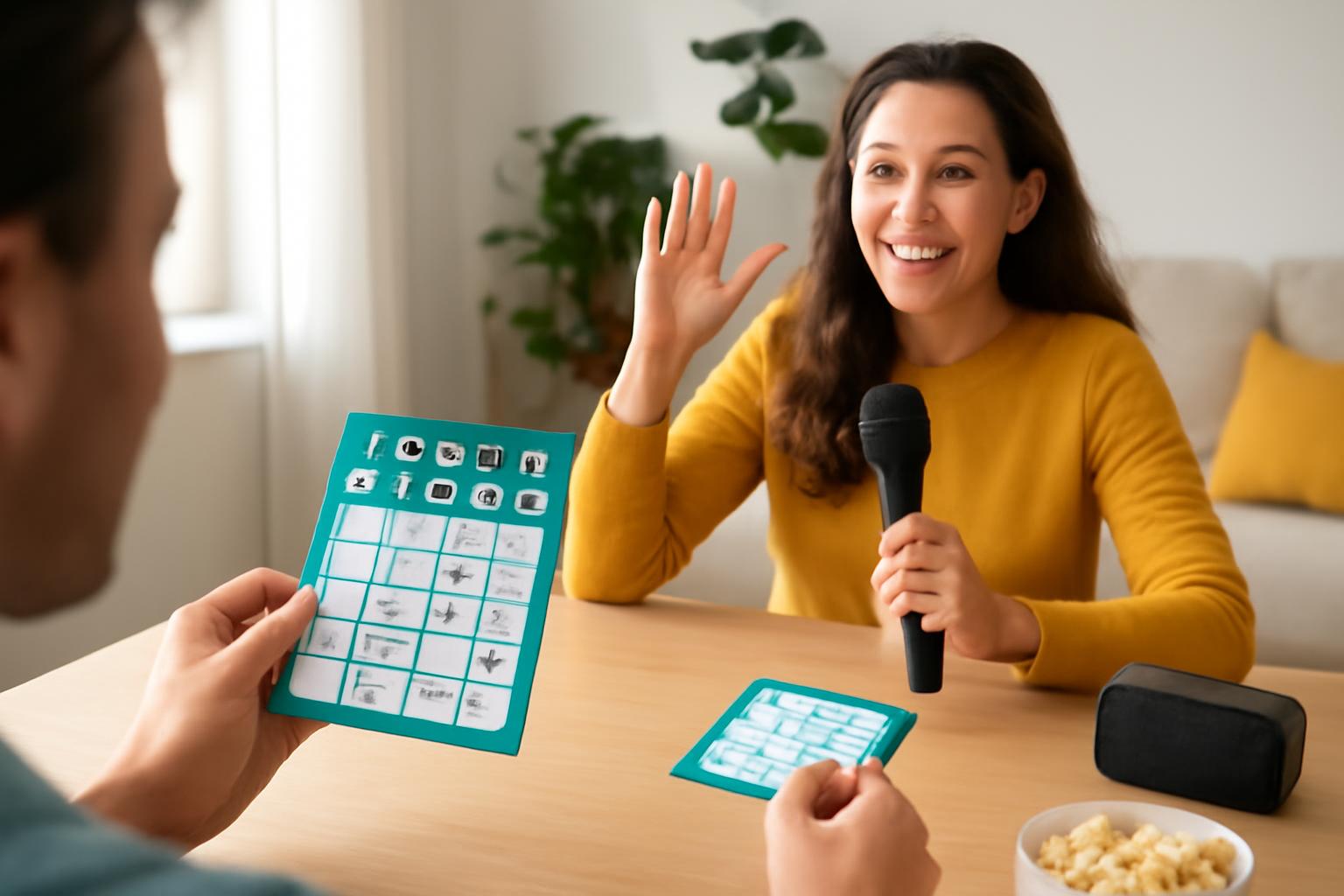
Music bingo is bingo played with songs instead of called numbers. Each square on your card shows a song title, an artist, or both. A host plays short music clips, and when you hear a song that appears on your card, you mark that square. Complete the announced winning pattern first, call “Bingo!”, and the host verifies your card, according to Bingofy’s guide to the game.
The comparison with regular bingo is the fastest way to understand it. In number bingo, a caller announces something like “B-12” and you check your grid. In music bingo, the clip itself is the call: instead of waiting for a number, you listen for a track and match it against your card, as BingoBlitz describes. The patterns, the cards, and the “first to complete the pattern wins” structure all carry over unchanged.
You will also see the game advertised as “musical bingo.” Per BingoBlitz, that is usually the same game under different branding, sometimes used to emphasize a DJ-led, high-energy presentation. The gameplay underneath is still bingo with songs on the card.
Here is one turn of play. The host plays the opening seconds of a well-known track. You recognize it, scan your card, and find the title in the third row. You mark that square and keep listening for the next clip. That single loop, hear, find, mark, is the entire skill the game asks of you.
How music bingo works
The full game is a repeating loop with a verification step at the end. BingoBlitz and Bingofy both document the same sequence:
- Each player receives a bingo card filled with song titles, artist names, or both, instead of numbers.
- The host announces which pattern wins this round, before the first clip plays, per Bingofy.
- The host plays one short song clip at a time, not full songs.
- If a clip matches an entry on your card, you mark that square. If it does not, you keep listening.
- When your marked squares complete the announced pattern, you call “Bingo!”
- The host checks your card against the songs already played. If the marks are correct, you win.
Two details in that loop matter more than beginners expect. First, the announced pattern controls everything. Bingofy lists rows, columns, diagonals, and full-card wins as possibilities, and BingoBlitz adds four corners, an X, and blackout rounds. A completed line means nothing if the host announced a different target for that round, so listen to the pattern announcement as carefully as you listen to the music.
Second, verification is a real step, not a formality. Per BingoBlitz, when you call “Bingo!”, the host checks that the songs you marked were actually played. Calling early or marking a square on a guess gets caught at this stage. The practical takeaway: mark only what you are confident you heard, and call bingo only when you believe the pattern is genuinely complete, a point Rockstar Bingo’s rules overview makes as well.
A night is usually organized into rounds, and each round can use a different theme, such as 90s pop or classic rock, according to BingoBlitz. Between rounds, cards are typically reset or swapped and a new pattern is announced.
Cards, recognition, and house rules
Two things determine how confidently you play your first game: understanding what is printed on your card, and knowing which rules the venue has chosen for that night. The card question has a fairly consistent answer across sources. The rules question does not, because hosts deliberately vary patterns, formats, and policies. The next two subsections separate what you can safely assume from what you should confirm before the first clip plays.
What appears on a music bingo card
A music bingo card is a standard bingo grid where each square holds a song reference instead of a number. Per BingoBlitz, cards may list the song title only, the artist only, or both title and artist. Bingofy notes that showing both title and artist is easiest for most events because it reduces confusion, but the format is the host’s choice, so check your card before play starts.
Here is the recognition question most first-timers ask: do you have to name the song out loud? Generally, no. Per BingoBlitz, in many games you do not shout an answer; the song simply needs to appear on your card, and you mark it. That is the key difference between music bingo and answer-out-loud trivia. You are matching, not answering, and nobody quizzes you individually.
How much music knowledge do you actually need? Less than you might assume. Bingofy states that players do not need to know music theory or be serious trivia fans; they only need to recognize enough songs to join in. Recognition helps you mark matches quickly, but it does not decide the game on its own. Which songs appear on your specific card, and which pattern the host announced, still shape who can win a given round. A player with encyclopedic music knowledge and an unlucky card can lose to a casual listener whose card lines up with the playlist. That mix of skill and card distribution is part of why the game stays friendly rather than competitive.
House rules and first-visit checks
There is no single universal rulebook. Per BingoBlitz, most games follow a consistent set of house rules that the host explains at the start, and that explanation is enough to play. Rockstar Bingo goes further: there are very few fixed rules beyond marking your card and calling bingo when you believe you have one, and the number of games and winning targets is entirely up to the host.
That flexibility means some choices you might assume are standard are actually provider or venue decisions. For example, Mix Tape Music Bingo recommends two lines to win but explicitly tells hosts they can choose any pattern they like. A digital platform’s default, an automatic playback system, or a fixed round structure is one implementation of the game, not a rule of the game. When you read different descriptions online and they disagree, they are usually describing different house rules, not contradicting each other about what music bingo is.
Before your first game, confirm these points with the host or venue:
- The winning pattern for this round. One line, two lines, four corners, X, or blackout are all documented options; the host’s announcement is the only one that counts.
- What your card shows. Titles only, artists only, or both, per BingoBlitz, since this changes what you listen for.
- How wins are verified. Expect the host to check your marked songs against what was played before awarding anything.
- Venue-specific policies the sources do not standardize. Whether phones or song-identification apps are allowed, whether team play is permitted, how ties are handled, whether cards have free spaces, what happens if you arrive after a round starts, and whether entry is free, ticketed, or tied to a purchase. None of these have a universal answer in the available material, so treat them as questions for the host, not assumptions.
Two minutes of questions before the first clip prevents the most common beginner mistake: calling bingo on a pattern the host never announced.
What to expect at a music bingo event
Expect a social, noisy, low-pressure room rather than a quiet quiz. Good Thomas describes musical bingo as a fully interactive experience where guests sing along, dance, and connect over favorite songs and artists. Bingofy lists the typical settings: bars, restaurants, corporate events, private parties, weddings, fundraisers, and community nights. If you have played pub trivia, the atmosphere is similar but more musical and less quiz-like, since you mark matches instead of answering questions.
Structurally, most events run in rounds with a host controlling the pace. Per BingoBlitz, each round can use a different theme, and the host sets both the pace and the winning patterns, which may change from round to round. Between clips, hosts often talk, take reactions, and build energy, so the game moves in bursts rather than at a fixed clock speed.
How long does it last? There is no single honest number, and you should be skeptical of any page that gives one as a universal fact. Mix Tape Music Bingo states directly that round length varies with the number of players and the game settings the host chooses. Rockstar Bingo adds that there is no rule for the number of games or targets; that is entirely up to the host. The variables are easy to reason through: longer clips and more host talk stretch each round, harder patterns like blackout require far more songs than a single line, more players usually means someone completes a pattern sooner, and a night with five short rounds runs very differently from one long full-card game. Rules-dependent details, such as whether cards include a free space, can also shift how quickly patterns complete. If timing matters to you, ask the venue how many rounds they run and roughly when the event wraps up.
Basic setup for hosting music bingo
If you want to run a casual game yourself, the minimum setup is short. Bingofy lists it as:
- Music bingo cards
- Markers or pens
- A playlist
- A phone, laptop, or tablet for playback
- Speakers
- A prize
That list covers a living-room game. For larger or public events, Mix Tape Music Bingo recommends adding a microphone for bigger crowds so announcements and instructions can be heard clearly.
Cards come in paper and digital versions, and neither is the “correct” format. Per BingoBlitz, paper cards suit casual home games and groups that like a classic feel, while digital cards work well for busy venues because they are easy to distribute and can reduce duplicates. King Trivia makes a similar venue-side point for its own format: digital cards mean no cleanup and no physical cards or daubers. Treat these as provider-specific implementations, not requirements; the game plays the same either way.
Timing and playlist numbers deserve the same caution. Rockstar Bingo suggests playing each song for around 20 seconds, but that is one platform’s recommendation, not a standard, and Bingofy simply advises short clips rather than full songs. On playlist size, Bingofy states that the right number of songs depends on how many players you have, the size of the cards, and how long you want the event to last. Any fixed figure you see published is tied to a specific card system or round structure, so plan from your own player count and target duration instead of copying a number.
One planning choice the sources leave to your judgment is playlist difficulty. Bingofy’s core observation, that players only need to recognize enough songs to join in, points to the tradeoff: a playlist built mostly from widely recognizable songs keeps beginners marking squares and engaged, while a playlist of obscure tracks turns the game into a frustrating identification test. A few less-familiar songs can add challenge for stronger crowds, but there is no documented ideal ratio, so match the playlist to the audience you actually expect. Announce the winning pattern clearly before each round, keep clips short, and verify wins against the songs you actually played, and the game largely runs itself.